
Used Rays heaters & geysers in Islamabad & Rawalpindi
Is a used Rays heaters & geyser worth buying?
Rays turns up in this category as a water-heating range rather than a general appliance line: gas storage geysers, electric ones, and dual models with a burner underneath and an element in the side of the same tank. The dual units are what people look for second-hand, because they carry on making hot water on the evenings when gas pressure falls away.
Made or assembled in Pakistan
Spares are widely stocked locally and most technicians in the twin cities have worked on these, so common faults are usually economic to repair.
Rays is locally made, so elements, thermostats, burner and pilot parts come from the ordinary hardware trade in Islamabad and Rawalpindi and are fitted by a plumber or an electrician. The element boss and the tank itself are the parts nobody can replace, which is why they decide whether a repair is worth starting at all.
Heaters & Geysers in stock now
Our current heaters & geysers, across all brands — ask us on WhatsApp if you want Rays specifically.
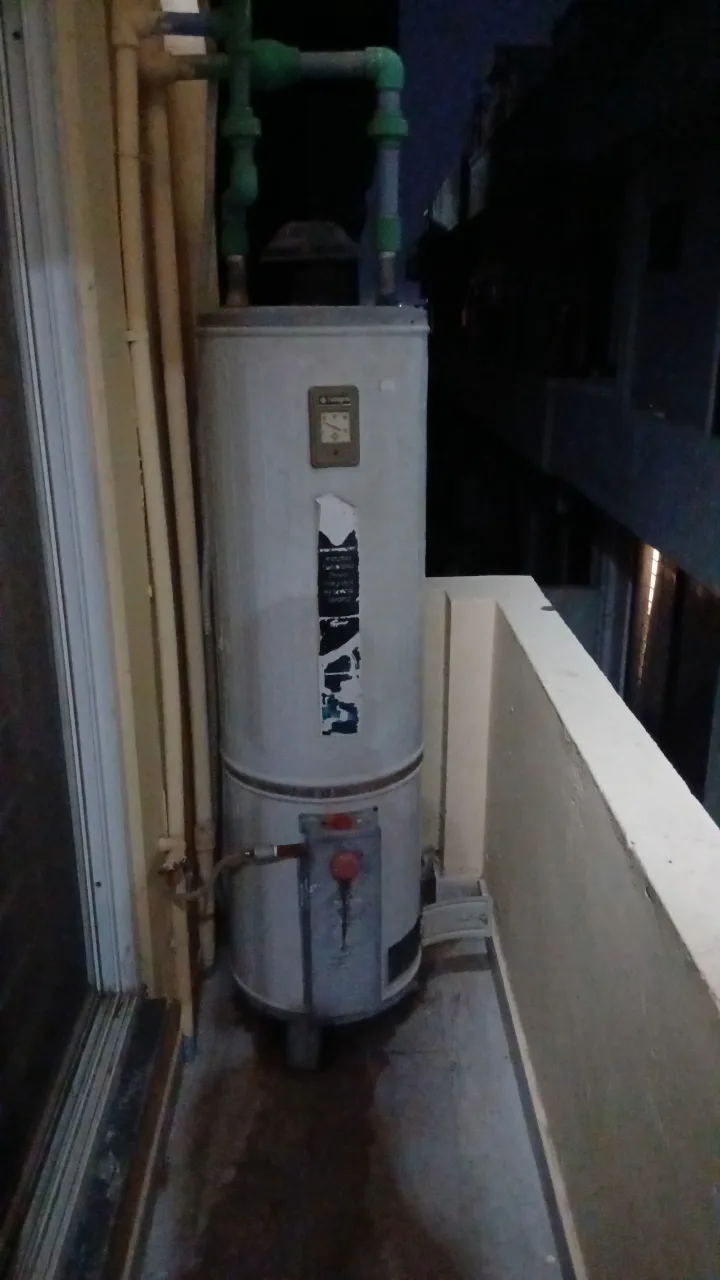
Checking a used Rays heaters & geyser
These are specific to Rays. The general heaters & geysers checks apply too and are on the heaters & geysers page.
Factory dual or retro-fit
A factory dual carries both a gas rating and an electrical rating on the plate, with a moulded terminal box and a boss fitted at manufacture. A gas geyser tapped for an element in a workshop shows a bolted-on boss and a trailing flex, and cutting a coated tank open afterwards leaves bare steel at the joint.
Test each fuel separately
Prove the burner and the element independently rather than accepting that the tap runs hot. On a dual unit half of what you are paying for is the side nobody bothers to switch on during a viewing.
Look at the element boss
The element screws into a threaded boss in the tank wall. Damp, a white mineral crust or rust around it means either a seeping gasket, which is a cheap fix, or the tank thinning at the joint, which is not worth repairing.
Two isolations, both proper
A dual geyser needs its own gas cock and its own switched electrical point. Installers often leave the electric side running off a trailing lead into a bathroom socket, and that is the thing to correct before the appliance goes back into use.
Test the gas late
Run the burner in the evening, when pressure in parts of both cities falls. That is the exact condition a dual unit exists to answer, and it is also when a marginal burner or a partly blocked injector shows itself.
What Rays heaters & geysers are worth
- A dual unit holds value above a single-fuel geyser only while both sides work; with a dead element it is a gas geyser carrying a redundant terminal box.
- The reason dual units are sought out is mechanical rather than fashionable: an element keeps heating when evening gas pressure falls, so the household is not left cold at the hour it matters.
- A workshop retro-fit grades below a factory dual, because a boss cut into a finished tank leaves bare steel at the joint and that is where the tank starts to go.
Model lines you will see second-hand
- Dual gas-and-electric storage geysers
- Gas storage geysers
- Electric storage geysers
General heaters & geysers checks
These apply whatever the badge on the front says — the heaters & geysers page covers them in full.
Look at the flame
Light a gas geyser or room heater and watch the burner for a full minute. Steady blue cones with clean edges are right. Yellow, lazy or lifting flames, or black soot on the burner shield and the ceramic plaques, mean incomplete combustion from blocked jets or a wrong air mix — a servicing job at best and a safety matter at worst.
Drain water from the base
Open the drain valve at the bottom of a storage geyser and catch a jugful. Clear water is fine. Brown water, rust flakes or grit means the inner tank is corroding from the inside, and once a tank has begun to perforate no patch holds for long. Water that no longer stays hot as long as it used to points the same way, because sediment has filled the tank floor.
Check the flue and diverter
On a gas geyser, look where the flue pipe meets the hood. Rust flaking off the collar, or soot smudged around the draught diverter and on the wall above it, says exhaust has been spilling into the room instead of going up the pipe. That is a fitting fault rather than a machine fault, but it tells you how the unit has been run.
Watch the pilot after lighting
Hold the control knob in, light the pilot, then release it. A pilot that dies every time usually means a tired thermocouple or a dirty pilot jet, both inexpensive. Confirm which it is before agreeing anything, because on some models the same symptom comes from a failing gas valve, which is a different repair altogether.
Check the radiator seams
On an oil-filled radiator, warm it through, then run a hand along the fin seams and the bottom edge, looking for weeping oil or a greasy film that has trapped dust. These are filled and sealed at the factory: a leaking one cannot sensibly be topped up, and it will smoke off the element as the level drops.
Check the element and earth
An electric geyser that takes far longer than it should to heat normally has an element buried in scale, which is common with the hard water here. Look at the plug top and cord for melting at the pins, confirm the appliance has a proper earth, and on a fan or halogen heater make sure the guard and the tip-over switch both work.
Rays heaters & geysers — questions
Is a used Rays dual gas and electric geyser worth buying?
Can a Rays dual geyser run on gas and electricity together?
Other heaters & geysers brands
Selling one instead? We buy used Rays heaters & geysers for cash.