
Used Nasgas heaters & geysers in Islamabad & Rawalpindi
Is a used Nasgas heaters & geyser worth buying?
Nasgas is a Gujranwala gas-appliance house — storage geysers, gas heaters and cooking ranges — and everything it makes is built around the same family of burners, gas cocks and control valves. Second-hand that matters more than it sounds: a shopkeeper can often match a fitting from elsewhere in the range, and any geyser plumber has worked on one before.
Made or assembled in Pakistan
Spares are widely stocked locally and most technicians in the twin cities have worked on these, so common faults are usually economic to repair.
Nasgas is made in Pakistan and its burners, thermostats, pilot assemblies, gas cocks and knobs are ordinary hardware-market stock in Islamabad and Rawalpindi, fitted by any geyser plumber. Injectors are sold by fuel type, so buy against sui gas or LPG rather than by model alone; the inner tank is not a repair item at all.
Heaters & Geysers in stock now
Our current heaters & geysers, across all brands — ask us on WhatsApp if you want Nasgas specifically.
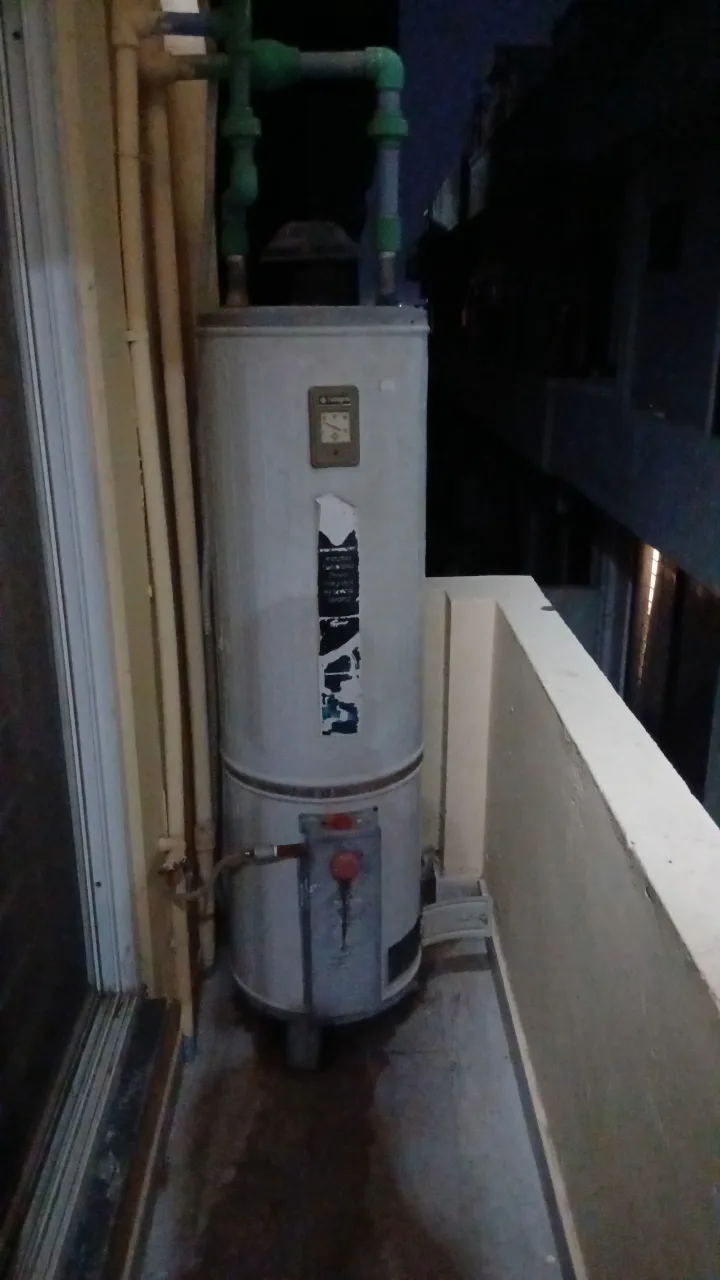
Checking a used Nasgas heaters & geyser
These are specific to Nasgas. The general heaters & geysers checks apply too and are on the heaters & geysers page.
Check the injector size
Nasgas sells the same appliances for sui gas and for cylinder LPG with different injector sizes, and units get moved between the two when households change supply. A lazy yellow flame that lifts off the burner is usually the wrong injector rather than a worn burner.
Press the jacket
The outer casing hides the insulation. A jacket that gives softly under the hand, or shows damp or a rust bloom at the lower rim, means water has been sitting in the insulation — and it came from inside the tank.
Torch the base
Put a light under the geyser and look hard at the drain cock and the seam around it. Rust trails there are the end of the appliance, whereas the burner, thermostat, pilot and knobs above it are all cheap trade parts.
Prove the flame safety
Light the pilot, hold the knob in, then release it and wait. If the pilot drops out the thermocouple has weakened. It is inexpensive to replace, but never accept a unit where someone has propped or bypassed the valve to keep it alight.
Look for borrowed parts
Because Nasgas fittings interchange across its own geysers, heaters and ranges, used units often carry a part off a different model. That is not a fault in itself, but check the knob, thermostat and gas cock actually suit this appliance rather than being close-enough substitutes.
What Nasgas heaters & geysers are worth
- The tank is the one part nobody replaces, so a sound tank with tired controls grades above a smart-looking unit with damp insulation.
- Fittings that interchange across the brand's own geysers, heaters and ranges keep ordinary repairs cheap, which is why worn Nasgas units stay in service instead of being broken up.
- A unit converted to cylinder LPG without the matching injector burns sooty and slow, and that shows on the burner and in the flame, costing value until it is set right.
Model lines you will see second-hand
- Storage gas geysers
- Semi-instant gas water heaters
- Gas room heaters
General heaters & geysers checks
These apply whatever the badge on the front says — the heaters & geysers page covers them in full.
Look at the flame
Light a gas geyser or room heater and watch the burner for a full minute. Steady blue cones with clean edges are right. Yellow, lazy or lifting flames, or black soot on the burner shield and the ceramic plaques, mean incomplete combustion from blocked jets or a wrong air mix — a servicing job at best and a safety matter at worst.
Drain water from the base
Open the drain valve at the bottom of a storage geyser and catch a jugful. Clear water is fine. Brown water, rust flakes or grit means the inner tank is corroding from the inside, and once a tank has begun to perforate no patch holds for long. Water that no longer stays hot as long as it used to points the same way, because sediment has filled the tank floor.
Check the flue and diverter
On a gas geyser, look where the flue pipe meets the hood. Rust flaking off the collar, or soot smudged around the draught diverter and on the wall above it, says exhaust has been spilling into the room instead of going up the pipe. That is a fitting fault rather than a machine fault, but it tells you how the unit has been run.
Watch the pilot after lighting
Hold the control knob in, light the pilot, then release it. A pilot that dies every time usually means a tired thermocouple or a dirty pilot jet, both inexpensive. Confirm which it is before agreeing anything, because on some models the same symptom comes from a failing gas valve, which is a different repair altogether.
Check the radiator seams
On an oil-filled radiator, warm it through, then run a hand along the fin seams and the bottom edge, looking for weeping oil or a greasy film that has trapped dust. These are filled and sealed at the factory: a leaking one cannot sensibly be topped up, and it will smoke off the element as the level drops.
Check the element and earth
An electric geyser that takes far longer than it should to heat normally has an element buried in scale, which is common with the hard water here. Look at the plug top and cord for melting at the pins, confirm the appliance has a proper earth, and on a fan or halogen heater make sure the guard and the tip-over switch both work.
Nasgas heaters & geysers — questions
Can a Nasgas geyser run on an LPG cylinder?
What actually fails on a used Nasgas geyser?
Other heaters & geysers brands
Selling one instead? We buy used Nasgas heaters & geysers for cash.