
Used Anex heaters & geysers in Islamabad & Rawalpindi
Is a used Anex heaters & geyser worth buying?
Anex is a Pakistani-market small-appliance brand, and its winter range — fan heaters, quartz and halogen rod heaters, small convectors — is sold through the same general appliance dealers as its kitchen line, under AG- model codes. That dealer network is the reason a used Anex is worth more than an unbranded bazaar heater: a switch, thermostat or element can still be ordered against a code.
Made or assembled in Pakistan
Spares are widely stocked locally and most technicians in the twin cities have worked on these, so common faults are usually economic to repair.
Because Anex is a local brand rather than an import, elements, quartz and halogen rods, rocker switches, thermostats and fan motors can be had both from Anex dealers against the model code and generically in the electrical bazaars of both cities. Moulded housings and guard grilles are the exception, and a broken guard is a reason to reject a heater rather than repair it.
Heaters & Geysers in stock now
Our current heaters & geysers, across all brands — ask us on WhatsApp if you want Anex specifically.
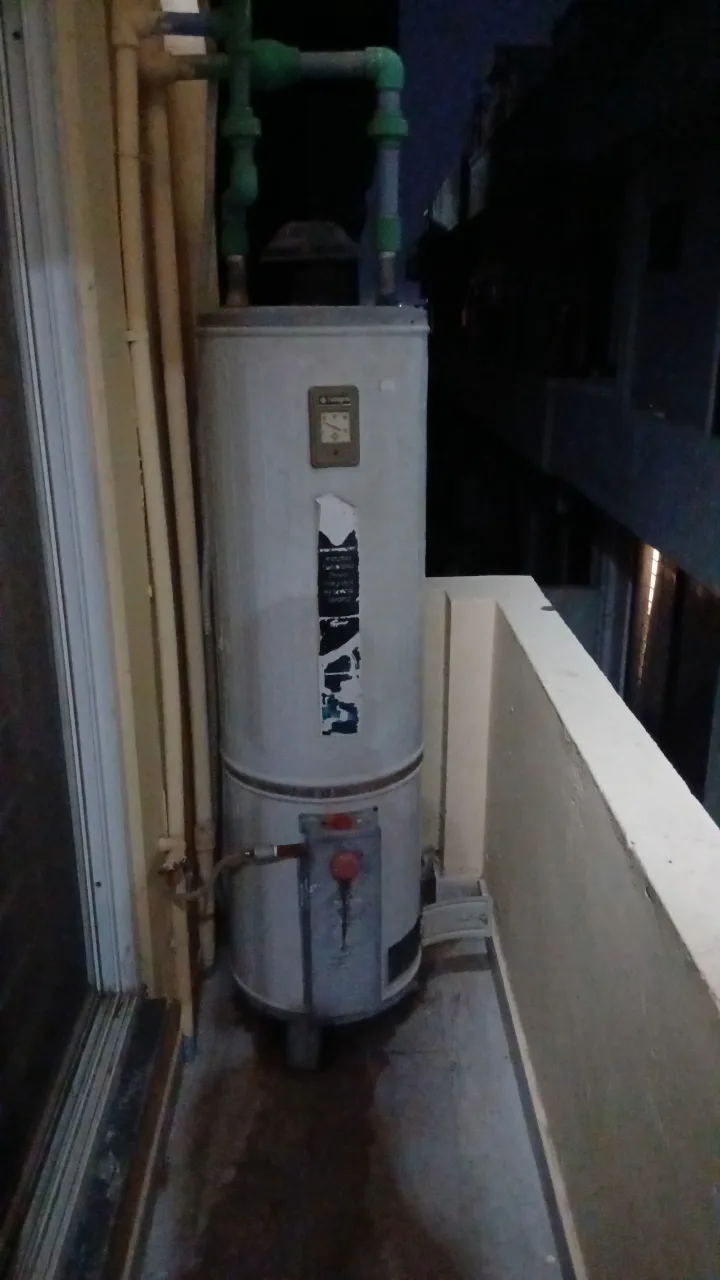
Checking a used Anex heaters & geyser
These are specific to Anex. The general heaters & geysers checks apply too and are on the heaters & geysers page.
Read the moulded name
Look for the brand and the AG- code on the rating plate and in the moulding, not only on a printed decal. A heater carrying nothing but a stick-on badge should be judged as an unbranded heater rather than as an Anex, because the parts route is what you are paying the name for.
Ask which dealer sold it
Anex sells through a dealer and service network, which is unusual at this price level, and that shop is the route to a replacement switch, thermostat or element. Even an expired warranty card is useful, since it confirms the heater was bought here as a genuine Anex.
Confirm it has a cut-out
Do not assume one is fitted: the range runs from plain rod heaters with nothing but a rocker switch to fan models with a thermal cut-out and a tip-over plunger. Find the plunger under the base first, then tilt the heater and listen for it cutting power.
Check the element ends
On quartz and halogen models the rods fail at their end caps rather than in the middle. Look for blackened ceramic ends, a rod that rattles in its clips and corroded spring contacts, all of which point at the rod rather than the switch.
What Anex heaters & geysers are worth
- The dealer network behind the badge is what holds value, because a switch, thermostat or element can be ordered against an Anex model code, so a tired unit is a repair rather than a write-off.
- Verified identity matters more here than on most cheap heaters: an imitation carrying the badge but not the plate loses exactly the parts route that makes an Anex worth buying.
- Safety condition sets the ceiling, since a heater with a defeated cut-out, a damaged guard or a spliced flex cannot honestly be sold as working at any grade.
Model lines you will see second-hand
- AG- series room heaters
General heaters & geysers checks
These apply whatever the badge on the front says — the heaters & geysers page covers them in full.
Look at the flame
Light a gas geyser or room heater and watch the burner for a full minute. Steady blue cones with clean edges are right. Yellow, lazy or lifting flames, or black soot on the burner shield and the ceramic plaques, mean incomplete combustion from blocked jets or a wrong air mix — a servicing job at best and a safety matter at worst.
Drain water from the base
Open the drain valve at the bottom of a storage geyser and catch a jugful. Clear water is fine. Brown water, rust flakes or grit means the inner tank is corroding from the inside, and once a tank has begun to perforate no patch holds for long. Water that no longer stays hot as long as it used to points the same way, because sediment has filled the tank floor.
Check the flue and diverter
On a gas geyser, look where the flue pipe meets the hood. Rust flaking off the collar, or soot smudged around the draught diverter and on the wall above it, says exhaust has been spilling into the room instead of going up the pipe. That is a fitting fault rather than a machine fault, but it tells you how the unit has been run.
Watch the pilot after lighting
Hold the control knob in, light the pilot, then release it. A pilot that dies every time usually means a tired thermocouple or a dirty pilot jet, both inexpensive. Confirm which it is before agreeing anything, because on some models the same symptom comes from a failing gas valve, which is a different repair altogether.
Check the radiator seams
On an oil-filled radiator, warm it through, then run a hand along the fin seams and the bottom edge, looking for weeping oil or a greasy film that has trapped dust. These are filled and sealed at the factory: a leaking one cannot sensibly be topped up, and it will smoke off the element as the level drops.
Check the element and earth
An electric geyser that takes far longer than it should to heat normally has an element buried in scale, which is common with the hard water here. Look at the plug top and cord for melting at the pins, confirm the appliance has a proper earth, and on a fan or halogen heater make sure the guard and the tip-over switch both work.
Anex heaters & geysers — questions
Are used Anex heaters safe to buy?
Can I still get parts for an old Anex heater?
Other heaters & geysers brands
Selling one instead? We buy used Anex heaters & geysers for cash.