
Used National heaters & geysers in Islamabad & Rawalpindi
Is a used National heaters & geyser worth buying?
National on a gas geyser or heater here is a local product, and more than one local maker sells under a National-style name. Panasonic retired its own National brand years ago, so nothing Japanese is implied by the badge and there is no model ladder you can look up. What follows is practical: spares are matched by measuring the old part, not from a catalogue.
Made or assembled in Pakistan
Spares are widely stocked locally and most technicians in the twin cities have worked on these, so common faults are usually economic to repair.
Parts for National-badged local geysers and heaters come from the gas-appliance hardware trade in Islamabad and Rawalpindi, where they are matched by measurement rather than by brand catalogue — the old thermocouple, thermostat or knob in your hand is worth more than any model number. That is exactly why the rating plate and the original fittings matter so much here.
Heaters & Geysers in stock now
Our current heaters & geysers, across all brands — ask us on WhatsApp if you want National specifically.
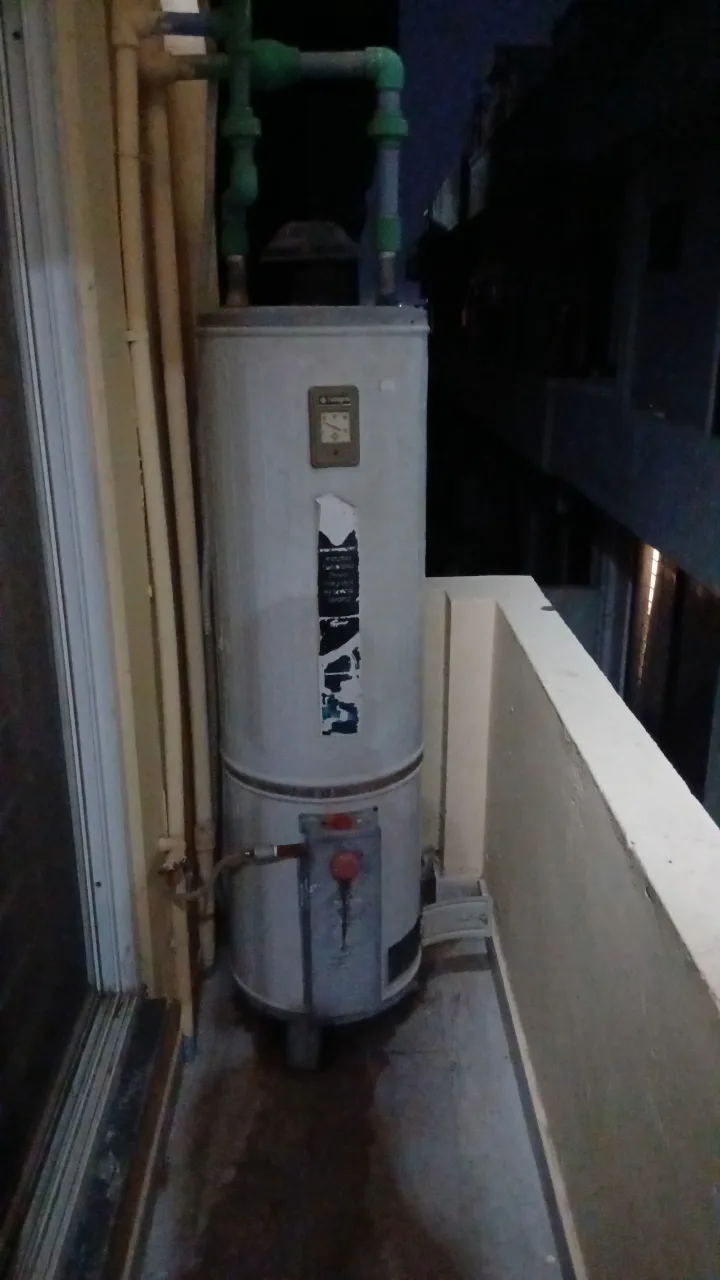
Checking a used National heaters & geyser
These are specific to National. The general heaters & geysers checks apply too and are on the heaters & geysers page.
Read the company name
The word National on the body tells you nothing; the full company name and address on the rating plate tells you which manufacturer built it. A plate that is missing or painted over turns every later repair into guesswork, and it is the biggest single thing separating two otherwise identical units.
Look for mismatched repairs
Where a badge is shared, previous owners buy whatever nearly fits. Look for a thermostat held on with wire, a knob that sits proud, a burner that does not seat square in its clips. Each one says the appliance has already been repaired by approximation.
Measure before buying parts
Spares here are matched by dimension: thermocouples come in standard lead lengths, thermostats vary by stem length and thread, burners by bar size. Take the old part to the shop rather than the brand name, and check that whatever is already fitted was matched the same way.
No Japanese assumptions
Buyers over a certain age read National as Panasonic's old appliance brand. A gas appliance built for local supply is not that, and the practical difference is where parts come from: the gas-appliance hardware trade, never an electronics service network.
What National heaters & geysers are worth
- A legible rating plate carries real value on this badge, because it is what lets a shopkeeper match a spare instead of guessing at dimensions.
- Units already repaired with near-fitting parts grade lower, since every approximate part makes the next repair harder to get right.
- The badge brings no service network of its own, so completeness and condition do all the work that a single-owner brand name would otherwise do.
General heaters & geysers checks
These apply whatever the badge on the front says — the heaters & geysers page covers them in full.
Look at the flame
Light a gas geyser or room heater and watch the burner for a full minute. Steady blue cones with clean edges are right. Yellow, lazy or lifting flames, or black soot on the burner shield and the ceramic plaques, mean incomplete combustion from blocked jets or a wrong air mix — a servicing job at best and a safety matter at worst.
Drain water from the base
Open the drain valve at the bottom of a storage geyser and catch a jugful. Clear water is fine. Brown water, rust flakes or grit means the inner tank is corroding from the inside, and once a tank has begun to perforate no patch holds for long. Water that no longer stays hot as long as it used to points the same way, because sediment has filled the tank floor.
Check the flue and diverter
On a gas geyser, look where the flue pipe meets the hood. Rust flaking off the collar, or soot smudged around the draught diverter and on the wall above it, says exhaust has been spilling into the room instead of going up the pipe. That is a fitting fault rather than a machine fault, but it tells you how the unit has been run.
Watch the pilot after lighting
Hold the control knob in, light the pilot, then release it. A pilot that dies every time usually means a tired thermocouple or a dirty pilot jet, both inexpensive. Confirm which it is before agreeing anything, because on some models the same symptom comes from a failing gas valve, which is a different repair altogether.
Check the radiator seams
On an oil-filled radiator, warm it through, then run a hand along the fin seams and the bottom edge, looking for weeping oil or a greasy film that has trapped dust. These are filled and sealed at the factory: a leaking one cannot sensibly be topped up, and it will smoke off the element as the level drops.
Check the element and earth
An electric geyser that takes far longer than it should to heat normally has an element buried in scale, which is common with the hard water here. Look at the plug top and cord for melting at the pins, confirm the appliance has a proper earth, and on a fan or halogen heater make sure the guard and the tip-over switch both work.
National heaters & geysers — questions
Is the National geyser brand Japanese?
How do I buy spares for a National geyser?
Other heaters & geysers brands
Selling one instead? We buy used National heaters & geysers for cash.