
Used Sanden Intercool shop & restaurant equipment in Islamabad & Rawalpindi
Is a used Sanden Intercool shop & restaurant equipment worth buying?
Sanden Intercool is Japanese-owned and manufactures commercial refrigeration in Pakistan, selling to the beverage trade and to business buyers rather than across an appliance shop floor. That shapes what turns up second-hand: fleet stock, wearing a drinks company's livery, with an interior laid out to a beverage planogram — shelf pitch and racking sized for bottles and cans rather than for general shop goods.
Assembled locally under licence
An established local service network means genuine parts are obtainable and repairs are generally worth doing.
Sanden Intercool manufactures here, so spares exist in Pakistan, but the channel is the trade one: commercial refrigeration suppliers and the contractors who service beverage fleets, not the appliance dealers who handle domestic brands. Fan motors, gaskets, door closers and controllers are obtainable that way; printed header panels and planogram racking are the awkward items.
Shop & Restaurant Equipment in stock now
Our current shop & restaurant equipment, across all brands — ask us on WhatsApp if you want Sanden Intercool specifically.
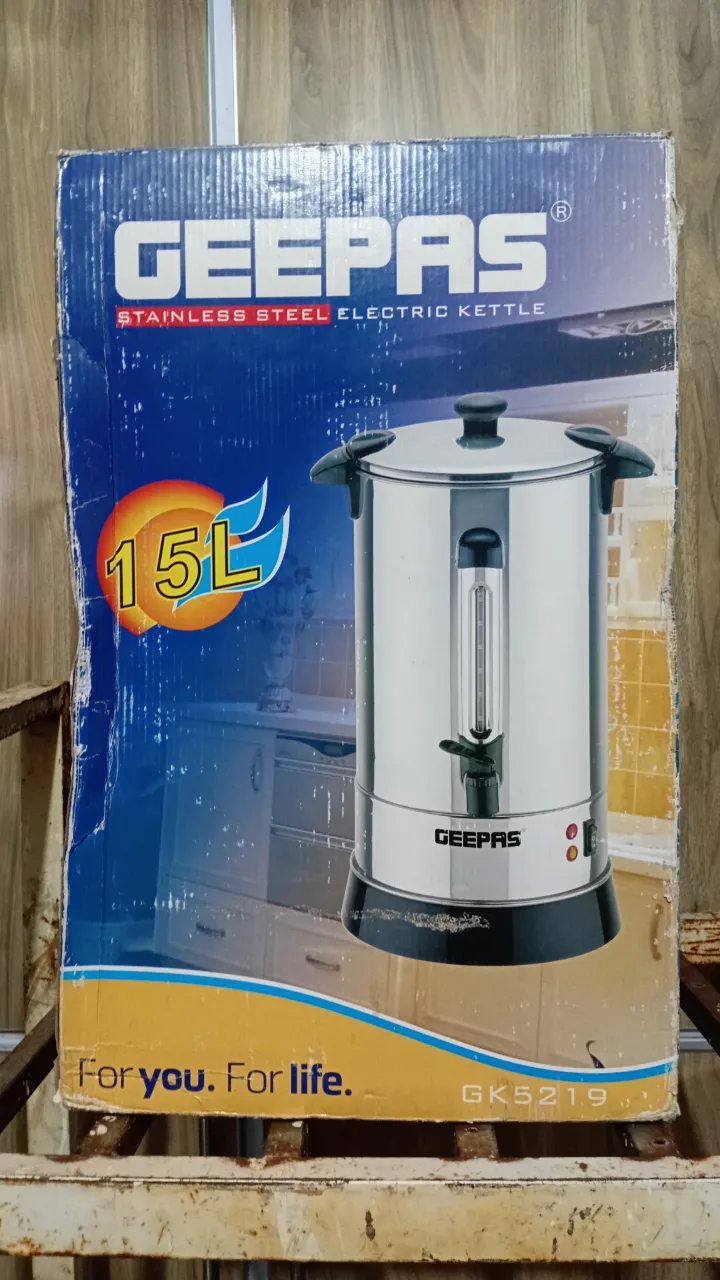
Checking a used Sanden Intercool shop & restaurant equipment
These are specific to Sanden Intercool. The general shop & restaurant equipment checks apply too and are on the shop & restaurant equipment page.
Find the maker under livery
The outside of these cabinets belongs to the drinks brand, so they change hands as "Coke coolers" with nobody knowing who built them. Sanden's name is on the data plate and sometimes on a small moulded badge at the door frame or kick panel, and the maker's name is what a parts supplier needs.
Ask how it was released
Cabinets placed in shops by beverage distributors stay the distributor's property until they are formally released or sold on. Ask for the invoice, auction slip or written release, because a cooler carrying a fleet asset number and no paperwork is a sale the next buyer will query as well.
Measure the shelf pitch
Racking in a beverage cooler is set to bottle and can heights, and on some cabinets the shelf positions are fixed rather than adjustable. Take the tallest thing you intend to chill and try it in the cabinet before agreeing anything.
Look for an energy controller
Fleet coolers are sometimes fitted with an add-on energy or occupancy controller wired between the plug and the cabinet. If there is an extra box or a sensor on the case, ask what it is and whether it stays, since it can hold the cooler in a setback mode.
Check behind the header panel
The lit canopy carries the drinks brand's printed panel. Ask to see it with that panel out: on some cabinets it leaves an unfinished header and an exposed lamp holder, and a replacement panel is not something a general appliance shop stocks.
What Sanden Intercool shop & restaurant equipment are worth
- The mechanical package was specified by a fleet buyer rather than a shopkeeper, so value sits in the cold side, and livery, header panels and scuffs are treated as consumable.
- The interior sets demand: racking sized for bottles is worth more to a shop selling drinks than to a bakery, so what the cabinet physically fits decides how quickly it moves.
- Spares come through commercial refrigeration suppliers rather than appliance dealers, so a buyer without that contact discounts the cabinet whatever its condition.
- An intact interior — all racking, the lock and its keys, the right shelves — counts for more here than on a domestic cabinet, because those parts are ordered from a trade supplier rather than picked off a shelf.
General shop & restaurant equipment checks
These apply whatever the badge on the front says — the shop & restaurant equipment page covers them in full.
Watch the chiller cycle off
A bottle cooler or display chiller that has been running for an hour should reach its set temperature and then switch the compressor off for a spell. A compressor that never stops is fighting low gas, a blocked condenser or a dead thermostat, and you can hear the difference from across the shop.
Test door seals with paper
Close the door on a slip of paper and pull it out. If it slides free with no drag, the magnetic gasket has hardened and warm air is being drawn in all day. Gaskets can be replaced, but a perished one usually comes with ice built up on the evaporator and a compressor that has been overworking for months.
Try a magnet on steelwork
Much prep furniture here is fabricated locally, so the sheet grade matters more than any badge. A fridge magnet grips thin 430-grade sheet firmly and barely holds on 304, which resists pitting far better around sinks and salt. Then look underneath at the legs, where mopping water rusts a table from the floor upwards.
Light every burner
On a commercial range, griddle or tandoor, each burner should light from its pilot or neighbour and hold a steady blue flame with no yellow tips. Lazy yellow flames and soot on the pan bottoms point at blocked jets, or jets sized for a different gas pressure. Check that the control valves turn smoothly rather than grinding.
Check the extraction canopy
Pull the baffle filters out and see that they are all there and can still be washed rather than being clogged solid with hardened grease. Switch the fan on and hold a tissue flat against the filter opening; the draw should hold it in place. Missing filters, a fan that hums without pulling, or grease weeping back out of the ductwork mean a fire risk and a deep clean before the kitchen can open.
Run the mixer through speeds
A spiral or planetary mixer should change speed without a knock from the gearbox and should not walk across the floor on its feet. On a fryer, check that the element and thermostat probe lift clear for cleaning, and that baskets, lid and drain tap are all present, since they are model specific and awkward to source separately.
Sanden Intercool shop & restaurant equipment — questions
Why can't I buy a new Sanden Intercool from an appliance shop?
Will a used Sanden bottle cooler suit a general shop?
Other shop & restaurant equipment brands
Selling one instead? We buy used Sanden Intercool shop & restaurant equipment for cash.