
Used Juki sewing & laundry machines in Islamabad & Rawalpindi
Is a used Juki sewing & laundry machine worth buying?
Juki is an imported Japanese industrial maker whose DDL straight-stitch and MO overlock designations have become a pattern much of the trade builds to. Second-hand, that matters more than the badge: hooks, feed dogs, throat plates and feet made to those patterns fit widely, so an imported head can still be kept running from parts bought locally. These are production heads on tables, not household machines.
Imported
Parts usually have to be imported or sourced from the grey market, so a repair takes longer and costs more — which matters more on an older unit than the build quality does.
Juki heads are imported, but the wear items — hooks, bobbin cases, feed dogs, throat plates, loopers, overlock knives and belts — are traded loose in Rawalpindi's sewing and machinery markets, because so many machines share the DDL and MO patterns. Genuine Juki-branded spares and unusual attachments are ordered in.
Sewing & Laundry Machines in stock now
Our current sewing & laundry machines, across all brands — ask us on WhatsApp if you want Juki specifically.
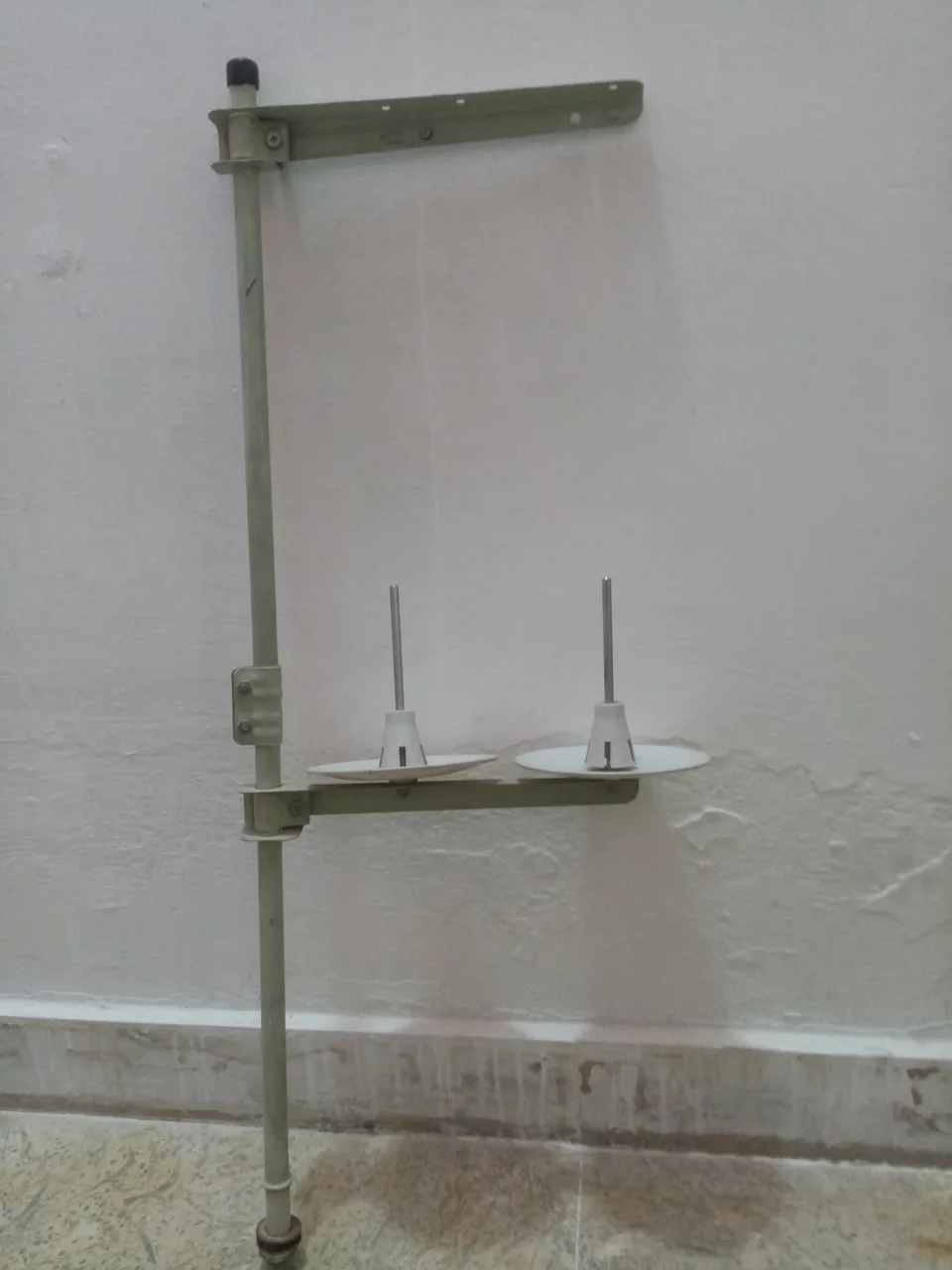
Checking a used Juki sewing & laundry machine
These are specific to Juki. The general sewing & laundry machines checks apply too and are on the sewing & laundry machines page.
Read the full model plate
Juki designates its heads DDL for single-needle lockstitch and MO for overlock, followed by a number that fixes the feed, hook and gauge. Hooks, throat plates and feet are ordered against that whole designation, so photograph it before agreeing anything.
Confirm the head is Juki-built
Many industrial heads are built to the same DDL and MO patterns and are sold under a range of names, some with no maker's name at all. Look for a maker's plate and a model cast into the body, because a sticker on the arm settles nothing.
Test the reverse-feed lever
On a DDL head, sew a short run, hold the lever down and reverse: the stitches should retrace the same holes without the cloth shifting. A reverse stitch that wanders off the line points at wear in the feed regulator or its linkage rather than at timing.
Check the overlock configuration
An MO head is set up for a fixed number of threads and needles, and changing that needs the matching needle plate, presser foot and looper parts. Confirm what it is currently set for, and that the differential feed dial actually alters the ratio.
Inspect the overlock knives
The upper and lower knives on an MO trim the edge as the cloth feeds, and they are consumables. Run a scrap through and look for a ragged or partly uncut edge, which usually means the knives are due rather than the machine being faulty.
What Juki sewing & laundry machines are worth
- Because so much industrial equipment is built to the DDL and MO patterns, wear parts fit widely, so an imported Juki stays economic to repair where a head with no pattern behind it must have parts sourced singly.
- A legible maker's plate carrying the full designation and serial supports value, because gauge, feed type and every ordered part follow from it; an unreadable plate leaves a fitter matching by eye.
- On an MO overlock, configuration is value: a head that comes with its current needle plate, feet and looper set is ready to work, while one stripped of them needs ordered-in parts before it stitches at all.
Model lines you will see second-hand
- DDL straight-stitch series
- MO overlock series
General sewing & laundry machines checks
These apply whatever the badge on the front says — the sewing & laundry machines page covers them in full.
Turn the balance wheel
With the machine unthreaded, turn the wheel by hand through several complete stitch cycles. It should move evenly under light resistance; a catch at the same point every rotation suggests a bent needle bar or a hook out of time, while a gritty, dragging feel is usually dried oil and old lint in the race.
Stitch a sample on cloth
Sew a seam on two layers and look at both faces. Loops sitting on the underside are normally just a tension or bobbin-case setting; stitches that skip at random, or thread that keeps shredding, point at needle-to-hook timing or a scored race and need a mechanic.
Open the bobbin case
Lift the bobbin case out and inspect the race track for rust pitting and scoring. A clean, oiled race lets thread run smoothly, whereas a pitted one keeps breaking thread however the tension is set. Note that the bobbin case itself is matched to the model and is the part most often lost.
Watch the feed dogs work
Lower the presser foot on a scrap and sew slowly: the feed dogs should rise through the plate, carry the cloth an even distance each stitch and drop back. Cloth that slips, bunches or drifts to one side means flattened dog teeth or a presser foot sitting crooked. Run a fingernail around the needle hole in the plate as well, since a burr there shaves thread on every stitch.
Ride the foot pedal slowly
On an electric machine the pedal should give a smooth range from a crawl up to full speed rather than jumping straight to fast. A pedal that surges, sticks or grows hot, and a motor belt gone cracked or glazed, are replaceable parts but they tell you how long the machine has stood. On an industrial head, the clutch motor should bite gradually instead of snatching the wheel from stop to full.
Work the stitch selector
On a zigzag or multi-stitch machine, change width and length one step at a time and watch the needle actually move, because the cams and gears that drive it wear and a selector can turn freely while nothing changes. The reverse lever should back the seam along the same line rather than wandering off it. A plain straight-stitch head has far less to go wrong here, which is part of why those keep selling.
Juki sewing & laundry machines — questions
What does DDL mean on a used Juki sewing machine?
How do I check a used Juki head is what it is sold as?
Other sewing & laundry machines brands
Selling one instead? We buy used Juki sewing & laundry machines for cash.