
Used Butterfly sewing & laundry machines in Islamabad & Rawalpindi
Is a used Butterfly sewing & laundry machine worth buying?
Butterfly is a Chinese make, imported rather than assembled here, and it is not backed by a manufacturer's service network in either city — these are bought, fitted and repaired in the sewing bazaars. The heads follow the long-established domestic pattern, which is why they stay repairable, and also why used ones so often circulate as assemblies of parts from several machines.
Imported
Parts usually have to be imported or sourced from the grey market, so a repair takes longer and costs more — which matters more on an older unit than the build quality does.
Butterfly is imported, but its heads take the common domestic-pattern consumables — needles, bobbins, shuttles, bobbin cases, belts and feet — which the sewing bazaars of Islamabad and Rawalpindi stock loose rather than by brand. Take the old part in with you, since near-fit substitutes are what cause most stitching complaints on these machines.
Sewing & Laundry Machines in stock now
Our current sewing & laundry machines, across all brands — ask us on WhatsApp if you want Butterfly specifically.
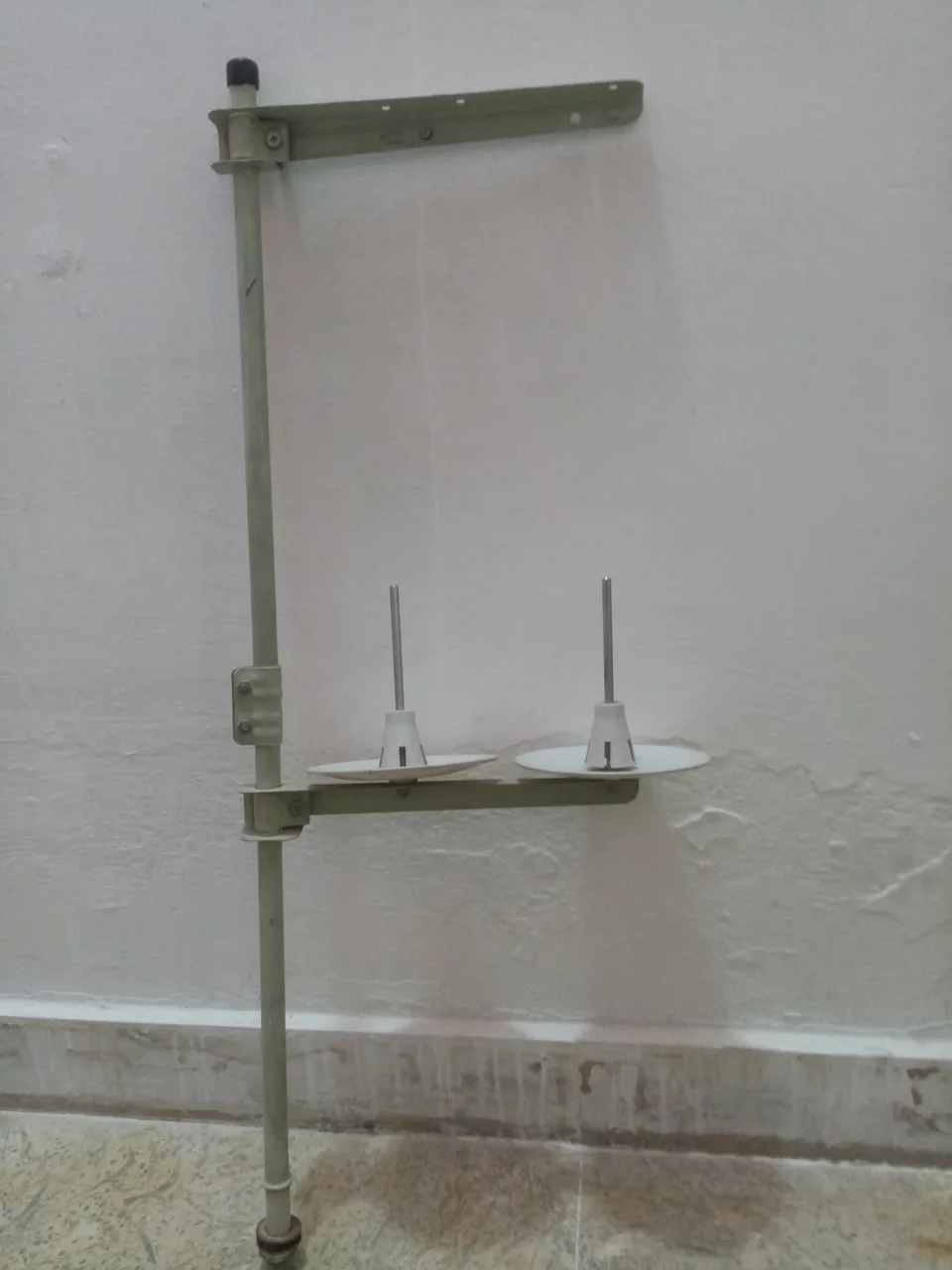
Checking a used Butterfly sewing & laundry machine
These are specific to Butterfly. The general sewing & laundry machines checks apply too and are on the sewing & laundry machines page.
Establish which hook it uses
These heads come either as long-shuttle machines, where a boat-shaped shuttle carries the bobbin, or as round-bobbin machines with an oscillating hook and a bobbin case. Nothing crosses between the two, so settle this before buying a single spare.
Seat the bobbin case yourself
Because pattern parts circulate loose in the bazaars, near-fit shuttles and bobbin cases end up fitted to these heads. The correct part drops in and locks without force, and the machine should balance its stitch without the tension being wound to its limit.
Check head and table match
Heads and treadle tables get married up from different machines. The hinge pins should drop into their sockets without packing under them, and the belt should run in line from balance wheel to treadle wheel without rubbing the table edge.
Try the bobbin winder
Release the stop-motion screw at the balance wheel, wind a bobbin, then tighten it again and sew. A perished winder tyre or a stop-motion screw that has been forced tells you how the machine has been kept, and both are cheap to sort.
What Butterfly sewing & laundry machines are worth
- Butterfly is imported and has no manufacturer's service route here, so its value sits entirely in the head being complete and standard: there is no brand counter to fall back on for a missing part.
- Loose part interchange cuts both ways. It keeps a worn head repairable, but a head running near-fit shuttles or plates stitches badly and grades down until the correct parts go back in.
- A head that genuinely belongs to its table, belt and drive sells as a working machine, while a bare head is bought only by someone who already has a stand to put it in.
General sewing & laundry machines checks
These apply whatever the badge on the front says — the sewing & laundry machines page covers them in full.
Turn the balance wheel
With the machine unthreaded, turn the wheel by hand through several complete stitch cycles. It should move evenly under light resistance; a catch at the same point every rotation suggests a bent needle bar or a hook out of time, while a gritty, dragging feel is usually dried oil and old lint in the race.
Stitch a sample on cloth
Sew a seam on two layers and look at both faces. Loops sitting on the underside are normally just a tension or bobbin-case setting; stitches that skip at random, or thread that keeps shredding, point at needle-to-hook timing or a scored race and need a mechanic.
Open the bobbin case
Lift the bobbin case out and inspect the race track for rust pitting and scoring. A clean, oiled race lets thread run smoothly, whereas a pitted one keeps breaking thread however the tension is set. Note that the bobbin case itself is matched to the model and is the part most often lost.
Watch the feed dogs work
Lower the presser foot on a scrap and sew slowly: the feed dogs should rise through the plate, carry the cloth an even distance each stitch and drop back. Cloth that slips, bunches or drifts to one side means flattened dog teeth or a presser foot sitting crooked. Run a fingernail around the needle hole in the plate as well, since a burr there shaves thread on every stitch.
Ride the foot pedal slowly
On an electric machine the pedal should give a smooth range from a crawl up to full speed rather than jumping straight to fast. A pedal that surges, sticks or grows hot, and a motor belt gone cracked or glazed, are replaceable parts but they tell you how long the machine has stood. On an industrial head, the clutch motor should bite gradually instead of snatching the wheel from stop to full.
Work the stitch selector
On a zigzag or multi-stitch machine, change width and length one step at a time and watch the needle actually move, because the cams and gears that drive it wear and a selector can turn freely while nothing changes. The reverse lever should back the seam along the same line rather than wandering off it. A plain straight-stitch head has far less to go wrong here, which is part of why those keep selling.
Butterfly sewing & laundry machines — questions
Will parts from other machines fit a used Butterfly?
How do I tell if a used Butterfly has been made up from several machines?
Other sewing & laundry machines brands
Selling one instead? We buy used Butterfly sewing & laundry machines for cash.