
Used Dawlance sewing & laundry machines in Islamabad & Rawalpindi
Is a used Dawlance sewing & laundry machine worth buying?
Dawlance is here for its washing machines, which are made in Pakistan and backed by the company's own service and parts channel. That is what changes the sum on a used automatic: a door lock, drain pump, pressure switch or control board is a model-matched part, and being able to order one against a plate number is the difference between a repair and a write-off.
Made or assembled in Pakistan
Spares are widely stocked locally and most technicians in the twin cities have worked on these, so common faults are usually economic to repair.
Dawlance is made in Pakistan and supported by an authorised service and parts route in both cities, so door locks, drain pumps, pressure switches, gaskets and boards are ordered against the model and serial rather than substituted. Ordinary items such as belts and hoses are also appliance-shop stock.
Sewing & Laundry Machines in stock now
Our current sewing & laundry machines, across all brands — ask us on WhatsApp if you want Dawlance specifically.
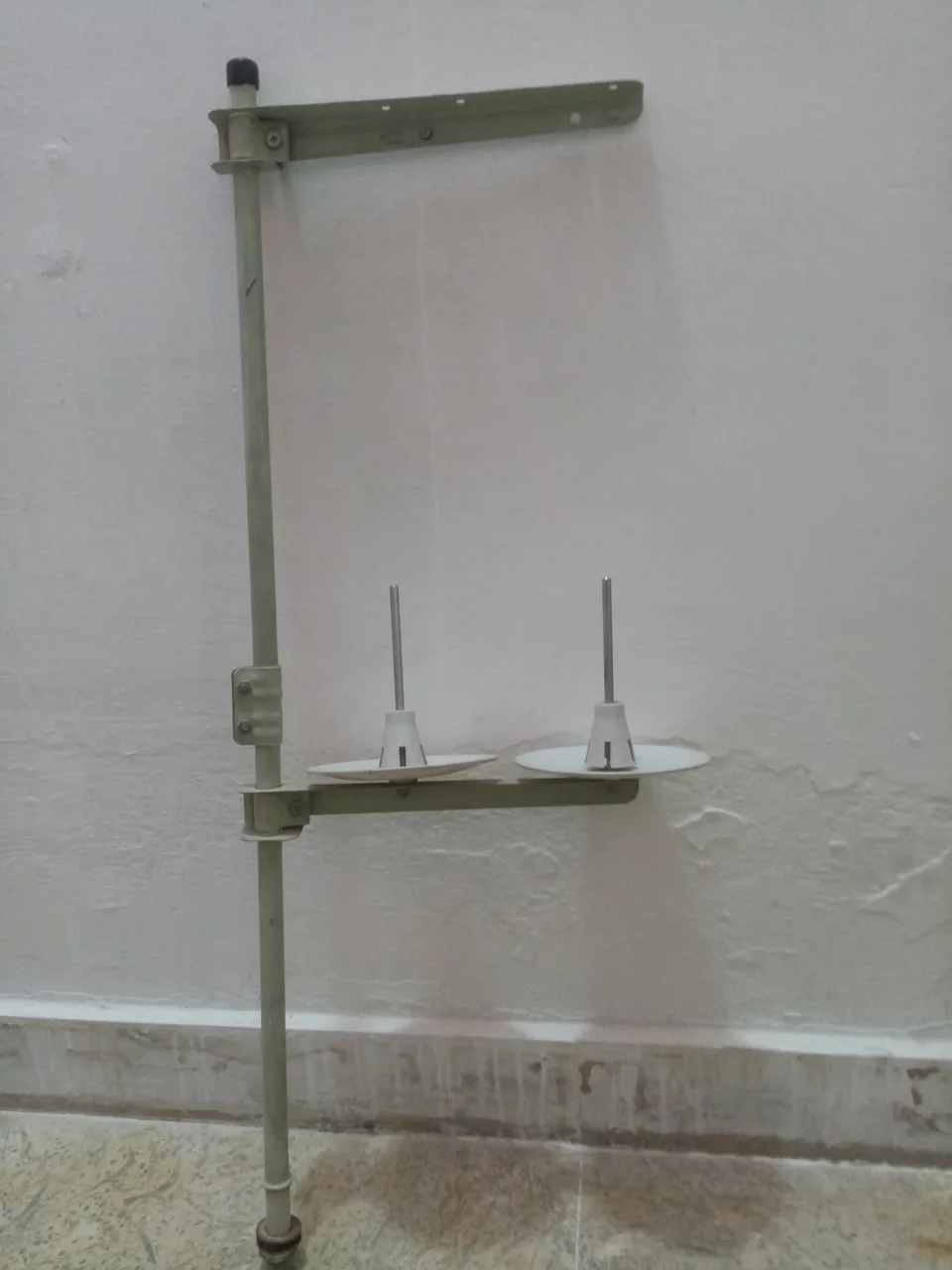
Checking a used Dawlance sewing & laundry machine
These are specific to Dawlance. The general sewing & laundry machines checks apply too and are on the sewing & laundry machines page.
Photograph the rating plate
Dawlance parts are supplied against the model and serial on the plate, usually on the back panel or inside the door aperture. Without it the brand's own channel is far less use, and a fitter is left matching parts by eye.
Inspect the door gasket fold
On a front loader, pull the rubber bellows back all the way round. Tears at the bottom fold, and grit or wire trapped in it, are what start leaks, and the gasket is a moulded model-matched part rather than a generic seal.
Clear the pump filter trap
Open the small hatch at the bottom front, drain it into a tray and look at what comes out. A machine that empties slowly is usually blocked here rather than pump-dead, and a trap that has clearly never been opened tells you how it has been kept.
Listen at the top of the spin
Bring the machine up to full spin and stand beside it. A rumble that rises and falls with the drum, or knocking as it runs down, is bearing wear, and reaching those bearings means splitting the outer tub.
Test the door lock cycle
The door should lock audibly as the cycle starts and release a short time after it ends, not instantly. A lock that never engages, or never releases, stops you using everything else that works, and it is one of the model-matched parts.
What Dawlance sewing & laundry machines are worth
- Being able to order a door lock, pump, pressure switch or board against a Dawlance plate number keeps ordinary automatic faults economic, which supports these against machines whose matched parts have to be found by chance.
- Drum bearings are the fault that outruns the parts channel, because the work is in splitting the outer tub rather than in the part itself, and that shows in the grade.
- An unreadable or missing rating plate quietly costs value, since the brand's parts route works from the model and serial rather than from a description of the machine.
General sewing & laundry machines checks
These apply whatever the badge on the front says — the sewing & laundry machines page covers them in full.
Turn the balance wheel
With the machine unthreaded, turn the wheel by hand through several complete stitch cycles. It should move evenly under light resistance; a catch at the same point every rotation suggests a bent needle bar or a hook out of time, while a gritty, dragging feel is usually dried oil and old lint in the race.
Stitch a sample on cloth
Sew a seam on two layers and look at both faces. Loops sitting on the underside are normally just a tension or bobbin-case setting; stitches that skip at random, or thread that keeps shredding, point at needle-to-hook timing or a scored race and need a mechanic.
Open the bobbin case
Lift the bobbin case out and inspect the race track for rust pitting and scoring. A clean, oiled race lets thread run smoothly, whereas a pitted one keeps breaking thread however the tension is set. Note that the bobbin case itself is matched to the model and is the part most often lost.
Watch the feed dogs work
Lower the presser foot on a scrap and sew slowly: the feed dogs should rise through the plate, carry the cloth an even distance each stitch and drop back. Cloth that slips, bunches or drifts to one side means flattened dog teeth or a presser foot sitting crooked. Run a fingernail around the needle hole in the plate as well, since a burr there shaves thread on every stitch.
Ride the foot pedal slowly
On an electric machine the pedal should give a smooth range from a crawl up to full speed rather than jumping straight to fast. A pedal that surges, sticks or grows hot, and a motor belt gone cracked or glazed, are replaceable parts but they tell you how long the machine has stood. On an industrial head, the clutch motor should bite gradually instead of snatching the wheel from stop to full.
Work the stitch selector
On a zigzag or multi-stitch machine, change width and length one step at a time and watch the needle actually move, because the cams and gears that drive it wear and a selector can turn freely while nothing changes. The reverse lever should back the seam along the same line rather than wandering off it. A plain straight-stitch head has far less to go wrong here, which is part of why those keep selling.
Dawlance sewing & laundry machines — questions
Is a used Dawlance automatic washing machine a safe buy?
Why does the model number matter on a used Dawlance?
Other sewing & laundry machines brands
Selling one instead? We buy used Dawlance sewing & laundry machines for cash.